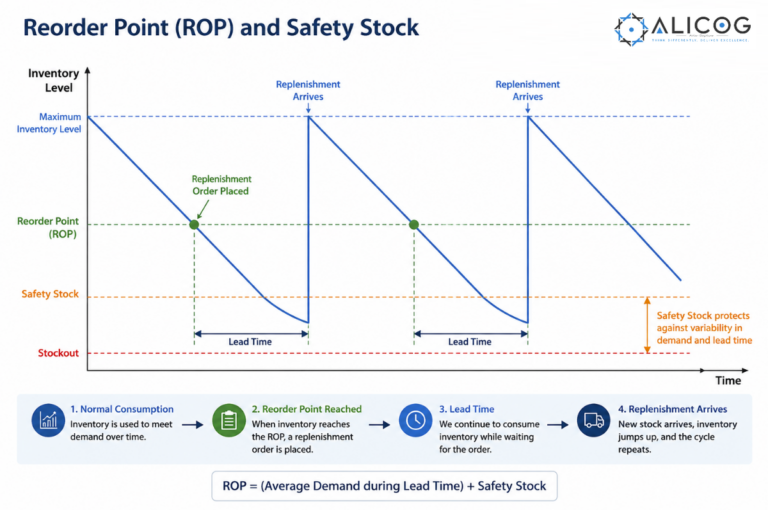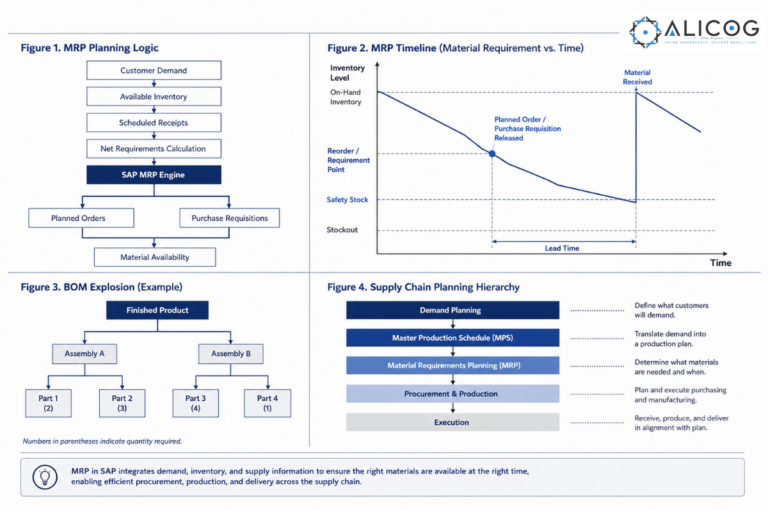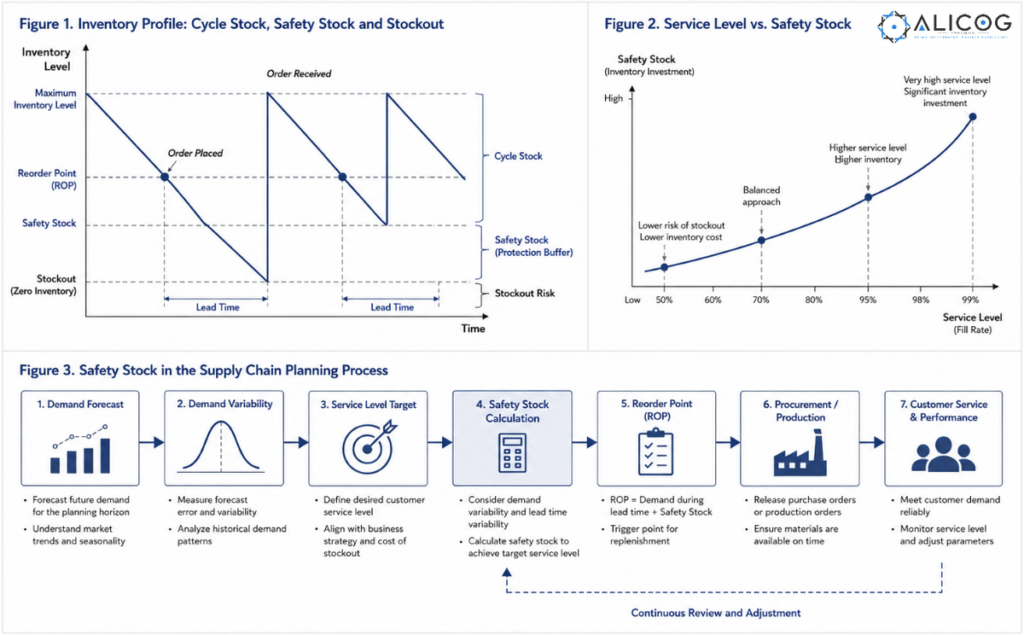
Inventory planning is a balancing act between customer service and working capital. Organizations need enough inventory to absorb uncertainty without creating unnecessary carrying costs. Safety stock is one of the most important planning parameters for achieving this balance. Rather than representing excess inventory, it is a strategic buffer that protects operations against demand variability, supplier delays, and other supply chain disruptions.
For organizations using SAP or other ERP platforms, safety stock is a critical input to inventory planning, replenishment, and Material Requirements Planning (MRP). When combined with robust planning processes and accurate master data, it helps build a more resilient, responsive, and cost-effective supply chain.
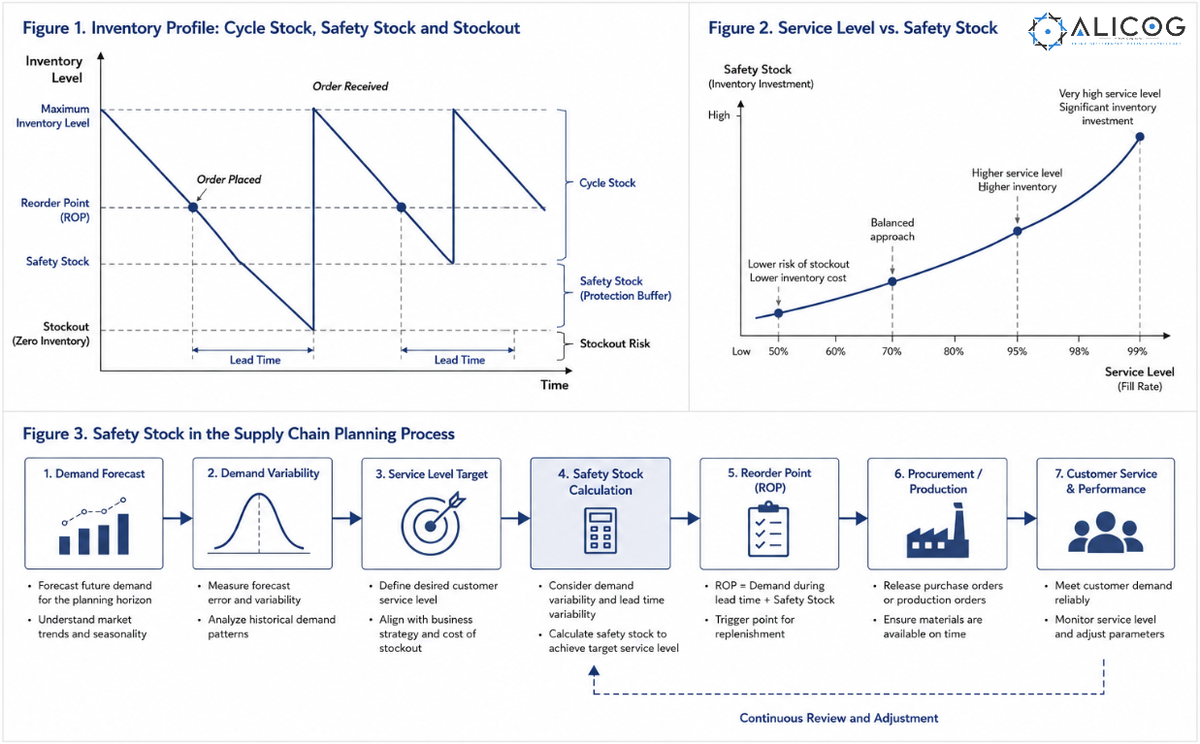
Safety stock is the additional inventory maintained above expected demand to protect against uncertainty. It absorbs unexpected variations in demand or supply, ensuring materials remain available until replenishment arrives. Unlike cycle stock, which is consumed during normal operations, safety stock is intended to protect the business when reality differs from the plan.
Demand forecasts are never perfect, suppliers can deliver late, transportation networks may be disrupted, and production schedules change frequently. Without a strategic inventory buffer, these variations can lead to stockouts, production interruptions, and poor customer service. Safety stock reduces operational risk while supporting consistent service levels.
Safety stock requirements are influenced by demand variability, supplier lead-time performance, desired service levels, forecast accuracy, and the business criticality of each inventory item. Products with unpredictable demand or long lead times generally require larger safety stock buffers.
Organizations use different methods to calculate safety stock depending on planning maturity. Simpler methods rely on historical consumption, while more advanced organizations use statistical models that align inventory investment with target service levels. The objective is to optimize inventory rather than maximize it.
Within SAP, safety stock is integrated into MRP and replenishment planning. The system considers the safety stock buffer when calculating available inventory and generating procurement or production proposals, helping organizations replenish inventory before shortages occur.
Successful organizations review safety stock regularly, maintain accurate master data, monitor supplier performance, segment inventory, and align inventory policies with business objectives. Safety stock should evolve as demand patterns and supply risks change.
Modern supply chain transformation is about balancing resilience with efficiency. Safety stock is a strategic planning policy that supports customer service while controlling working capital. When combined with MRP, reorder point planning, and inventory optimization, it becomes an important contributor to supply chain performance.
Safety stock remains one of the most effective tools for managing uncertainty. Its value lies not in carrying more inventory but in carrying the right inventory at the right time. Organizations that combine robust planning processes, reliable data, and continuous improvement can improve resilience, reduce inventory costs, and deliver superior customer service.
Expert en Supply Chain et SAP S/4HANA avec plus de 20 ans d'expérience industrielle. Fondateur d'ALICOG, cabinet de conseil spécialisé en transformation supply chain.
En savoir plus →Premier échange de 30 min avec un expert ALICOG — sans engagement.